

The Human Resources field is undergoing a profound transformation. By 2026, organizations will need to adapt to new technologies, ways of working, and employee needs. Understanding HR trends for 2026 is key to optimizing talent management, improving the employee experience, and increasing operational efficiency.
How artificial intelligence, well-being, and digitization will transform talent management in 2026

In 2026, people management faces a turning point
After a challenging 2025—including regulatory changes, digital acceleration, and the mass adoption of artificial intelligence—organizations are redefining how they manage talent, culture, and internal growth.
The focus is no longer solely on optimizing processes, but on integrating technology, analyzing meaningful data, and caring for people to drive real results. More than 80% of professionals already trust AI tools as a reliable source of information, although human validation remains key to their effective adoption.
👉 If you manage talent, operations, or finance, keep reading: in this article, we present the seven main trends that will shape the direction of Human Resources departments in 2026, along with practical recommendations for implementing them.
1. Artificial Intelligence applied to people management
Artificial intelligence has gone from being a promise to becoming an essential ally in HR. By 2026, its use will enable the automation of repetitive processes, from personnel selection to performance analysis.
With intelligent tools, large volumes of data can be analyzed to make decisions based on real and accurate information. This reduces errors and frees up time for strategic tasks.
The key is not to replace human judgment, but to enhance it with data, context, and prediction.
Example: AI software can filter resumes, pre-select candidates, and send automatic notifications, speeding up the hiring process.
2. People Analytics: data for better leadership
The leadership of the future is information-based leadership. The use of People Analytics allows you to detect patterns, anticipate problems, and make more objective decisions that are aligned with the reality of the team.
People Analytics is a growing trend that allows key employee metrics such as turnover, performance, and work environment to be measured. The information obtained helps predict risks, design development plans, and improve talent retention.
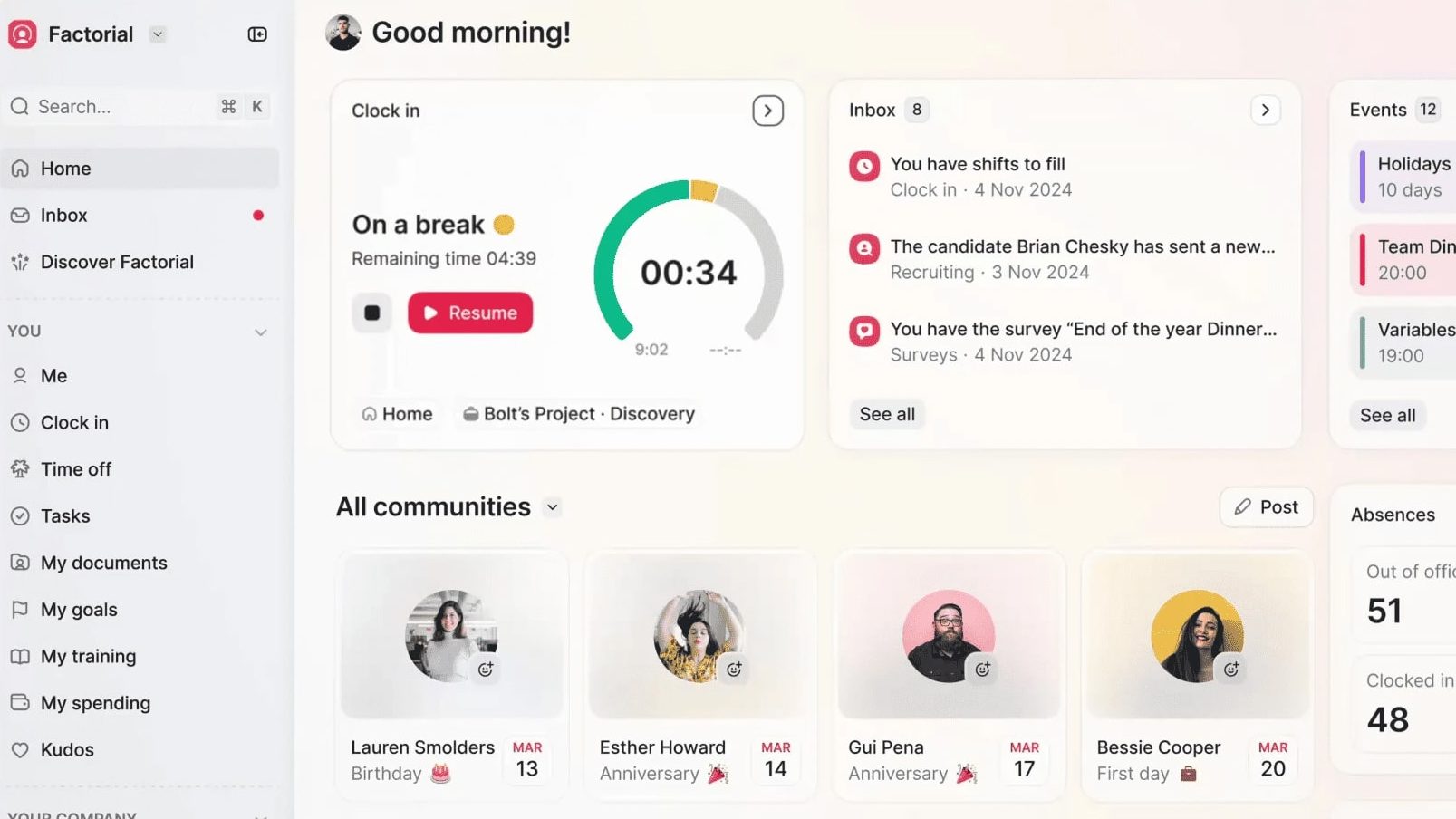
Tip: Combine People Analytics with satisfaction surveys to gain a comprehensive view of your workforce.
3. Team well-being as a competitive advantage
In 2026, employee experience is no longer an "extra," but a decisive factor in attracting and retaining talent. People increasingly value aspects such as flexibility, work-life balance, mental health, and personalized compensation.
Trends for 2026 include physical and emotional wellness programs, flexible schedules, and hybrid work environments. A realistic approach to wellness directly impacts productivity, engagement, and retention.
Companies that commit to consistent and sustainable policies achieve more stable, motivated teams that are aligned with the project.
4. Culture of growth and professional development
Talent stays where it can grow. The culture of continuous learning and professional development is becoming one of the main priorities in HR.
Performance evaluations, career plans, and measurable objectives make progress visible, recognize effort, and define next steps.
Organizations that structure these processes well not only improve engagement but also have a positive impact on their financial results.

5. Continuous training and personalized learning
Training is evolving towards more flexible and practical models. By 2026, HR departments must implement reskilling and upskilling programs, ensuring that employees develop digital and adaptive skills to meet market challenges.
Micro-content, skills-based training, and immediate feedback improve internal employability and prepare teams for an ever-changing work environment.
Investing in training is no longer an option: it is a strategic necessity.
Example: internal digital skills courses, e-learning platforms, and personalized mentoring.
6. Strategic recruitment and candidate experience
Hiring quickly does not mean hiring better. The great challenge of recruitment in 2026 is to balance agility and quality, avoiding reactive decisions that generate turnover and cultural mismatches.
Process automation, the use of candidate tracking systems, and a clear value proposition help attract profiles that are aligned with the company.
A carefully crafted candidate experience is the first step in building a strong and lasting working relationship.
7. Comprehensive digitization of HR and finance
Hiring quickly does not mean hiring better. The great challenge of recruitment in 2026 is to balance agility and quality, avoiding reactive decisions that generate turnover and cultural mismatches.
Leaders must adapt to hybrid and multigenerational teams. Organizational agility enables them to respond quickly to market changes, implement new technologies, and foster collaboration between departments.
Tip: Foster a culture of digital leadership, soft skills training, and constant communication.
How to apply these trends in your company
- Identify which trends are priorities for your organization.
- Define KPIs and metrics to measure results.
- Implement technologies that facilitate automation and data analysis.
- Designs continuing education and comprehensive wellness programs.
- Continuously evaluate the impact of initiatives to adjust strategies.
Conclusion
Human Resources trends in 2026 reflect a profound change: more data, more technology, and, above all, more focus on people.
Organizations that know how to anticipate and adapt will not only attract better talent, but will also build teams that are more committed, resilient, and prepared to grow in an increasingly competitive environment.
