

Choosing the best ERP for a medium-sized company is a strategic decision that impacts operational efficiency, scalability, and long-term profitability.
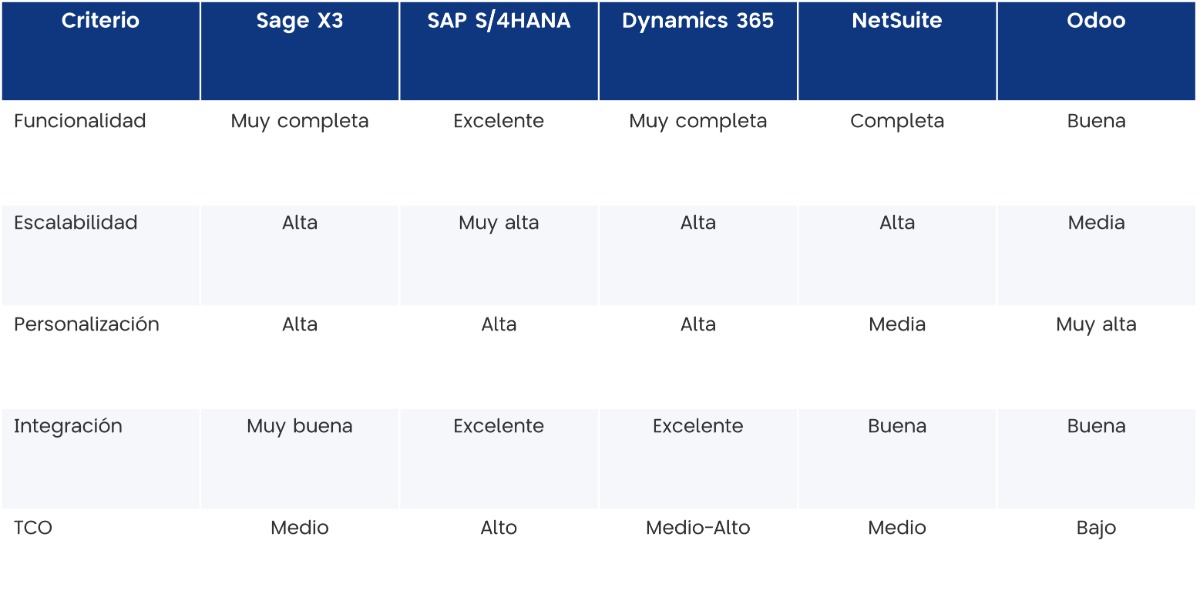
This report aims to compare Sage X3 with other leading ERP systems on the market (SAP S/4HANA, Microsoft Dynamics 365, Oracle NetSuite, and Odoo) in medium and large business environments. Key criteria such as functionality, scalability, customization, integration, total cost of ownership, usability, and deployment options are analyzed.

Comparison Criteria
Functionality: Coverage of business processes (finance, production, logistics, CRM, BI).
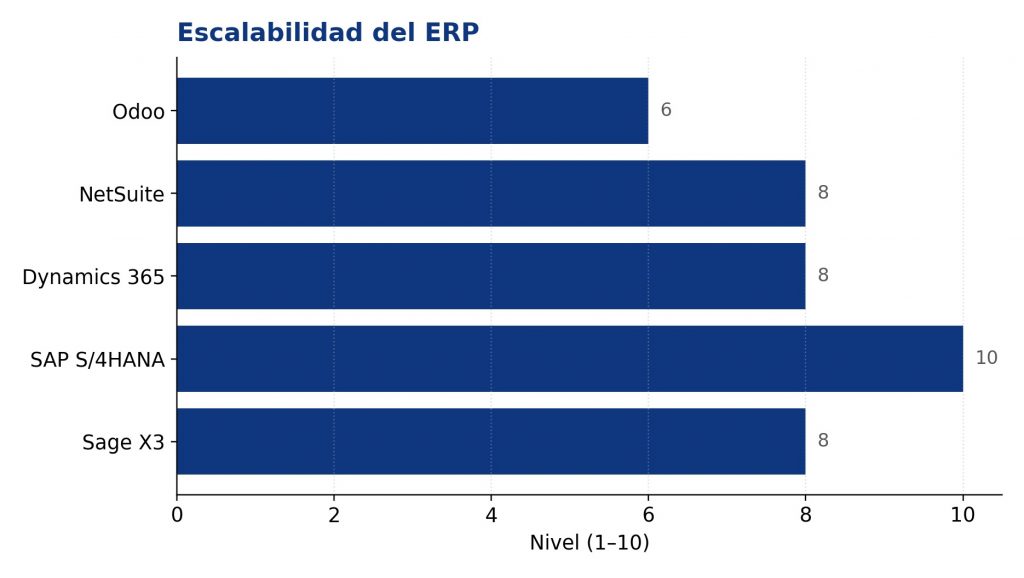
Scalability: Ability to grow with the company.
Customization: Flexibility to adapt processes.
Integration: With other applications and systems.
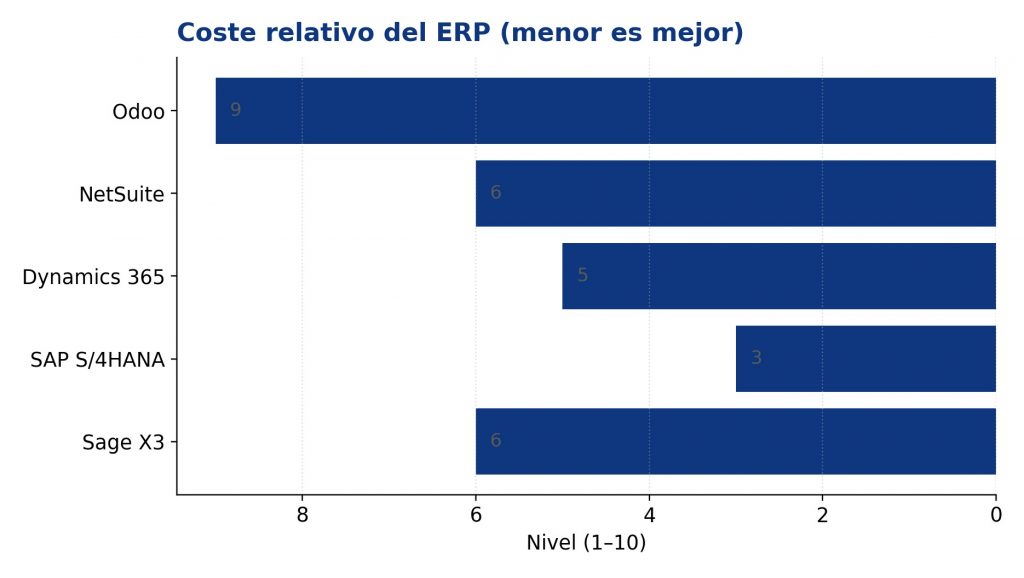
Total Cost of Ownership (TCO): Licenses, implementation, maintenance.
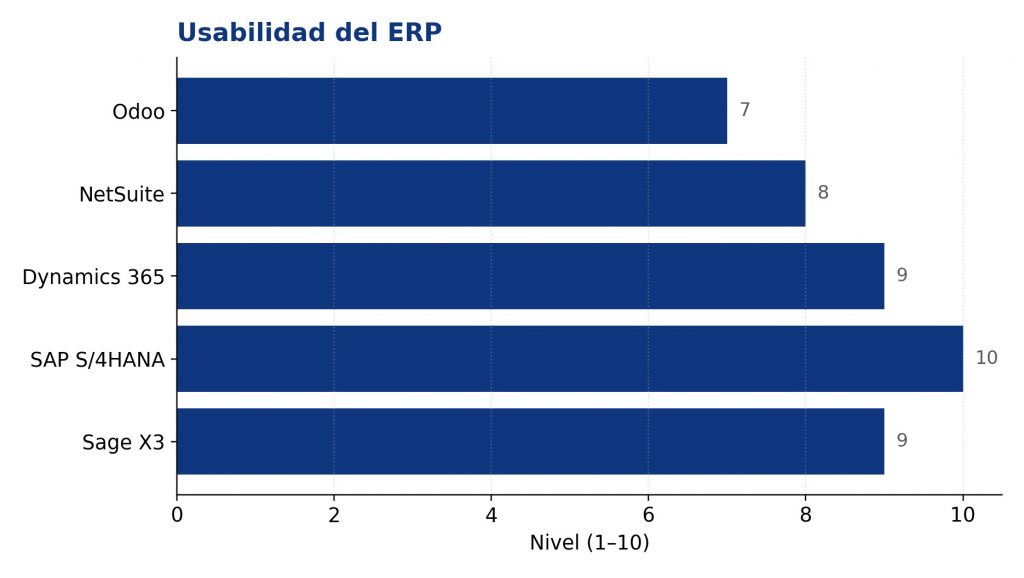
Usability: User experience and interface.
Deployment options: Cloud vs. On-Premise.
Comparison Table
Which ERP should you choose based on the size of your company?
For medium-sized companies
- Good balance between cost and functionality.
- Reasonable implementation.
- Progressive scalability.
For large corporations
- High functional capacity.
- Global integration.
- Complex processes.
Detailed analysis
- Sage X3: Strong in manufacturing, distribution, and finance. Flexible in customization. Mid-range cost, good value for money.
- SAP S/4HANA: Ideal for large corporations. High cost, complex implementation.
- Dynamics 365: Native integration with Microsoft. Good balance between functionality and cost.
- NetSuite: 100% cloud-based, highly geared toward global companies.
- Odoo: Open source, very flexible, but less robust for large environments.
Advantages and Disadvantages
- Sage X3: Advantages: Flexibility, good value for money. Disadvantages: Less global presence than SAP.
- SAP S/4HANA: Advantages: Full functionality. Disadvantages: Cost and complexity.
- Dynamics 365: Advantages: Integration with Microsoft. Disadvantages: Dependence on the Microsoft ecosystem.
- NetSuite: Advantages: Cloud native. Disadvantages: Less customizable.
- Odoo: Advantages: Low cost, high flexibility. Disadvantages: Less robust for large companies.
Conclusions and Recommendations: For medium-sized companies: Sage X3 or Dynamics 365 are balanced options. For large corporations: SAP S/4HANA dominates, albeit at a higher cost. For cloud environments: NetSuite is very competitive. For companies seeking low cost and flexibility: Odoo.
Comparative Charts
Below are graphs illustrating the comparison in terms of functionality, scalability, and cost.

Strategic Recommendations
Medium-sized companies: Sage X3 or Dynamics 365 offer a balance between cost and functionality.
Large corporations: SAP S/4HANA is the most robust option, although it is more expensive and complex.
Cloud-oriented companies: NetSuite is ideal due to its 100% cloud-based architecture.
Companies focused on low cost and flexibility: Odoo is the best alternative, although it requires specialized technical support.